
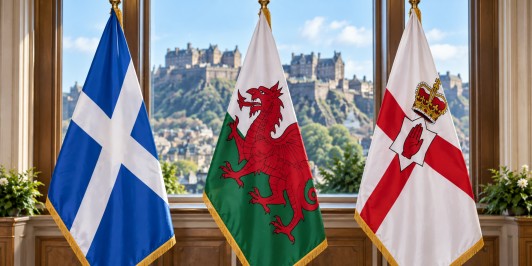
In a bold political move, the leaders of Scotland, Wales, and Northern Ireland have united to affirm their respective nations’ right to self-determination, pushing for preparations for potential constitutional changes within the United Kingdom. This joint declaration was formalized in Cardiff, featuring signatures from Welsh First Minister Rhun ap Iorwerth, Scottish First Minister John Swinney, and Northern Ireland First Minister Michelle O’Neill. The document emphasizes that each nation should have the democratic authority to decide their own future direction.
The declaration marks a significant step for Scotland’s Scottish National Party, Wales’ Plaid Cymru, and Northern Ireland’s Sinn Féin, all of which advocate for severing their constitutional links with the UK, albeit with varying strategies and timelines. While Swinney and O’Neill support the idea of holding future referendums, the Welsh leader refrained from committing to a precise timetable for a vote in Wales. This collaborative effort underlines a shared vision for autonomy and self-governance among the devolved nations.
Moreover, the leaders emphasized the importance of enhanced cooperation across Scotland, Wales, and Ireland, particularly focusing on sectors such as trade, investment, energy, and European relations. They contended that Brexit has diminished economic prospects, suggesting that their nations should bolster connections with the European Union to counteract these effects. This aspect of the declaration points to a collective strategy aiming to mitigate the economic challenges posed by the UK’s departure from the EU.
This development underscores a shift in the political landscape, with all three devolved nations now led by figures advocating for independence or substantial constitutional reform. The declaration calls upon the UK government to support democratic processes that could determine the future status of these nations. The leaders’ united front represents a growing momentum towards significant political change within the UK.
Historically, Scotland voted against independence in a 2014 referendum, where 55% of voters opted to remain within the United Kingdom. Meanwhile, the discourse surrounding Irish reunification in Northern Ireland has gained traction, with increasing calls for a future referendum on the issue. This evolving dialogue reflects a broader trend of questioning and potentially redefining the constitutional relationships within the UK.