
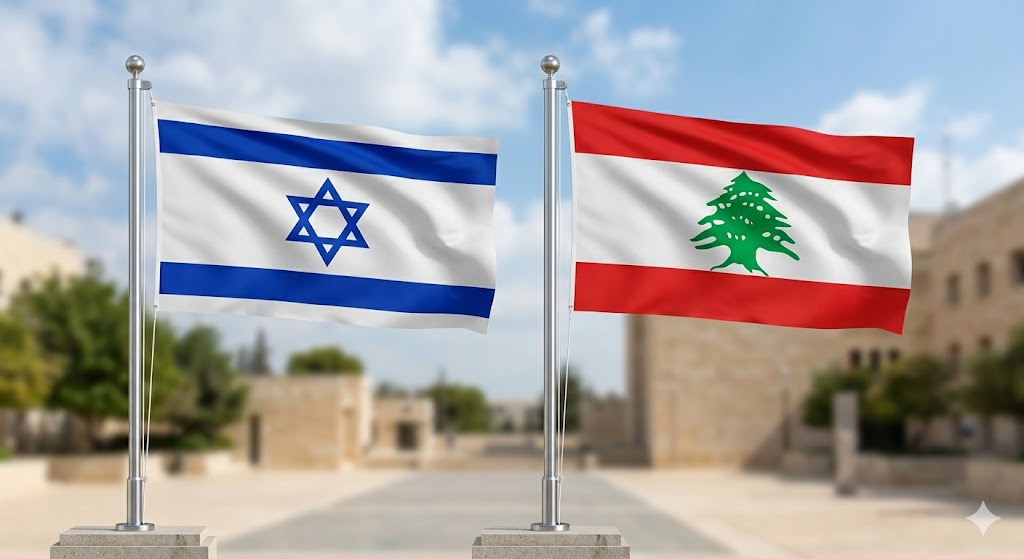
In a significant diplomatic development, Israel and Lebanon have agreed to extend a ceasefire and continue dialogue toward achieving a broader peace agreement. This decision was announced in a joint statement also involving the United States. The ceasefire’s continuation is dependent on a complete halt to attacks by Hezbollah, an armed group supported by Iran, which operates independently of the Lebanese government and is not participating in the current negotiations.
As part of this renewed effort for peace, both nations plan to set up pilot security zones. Within these zones, the Lebanese Armed Forces will maintain exclusive control, ensuring that no non-state armed factions are present. This initiative aims to bolster security and lay the groundwork for a more extensive peace agreement. The agreement emerged from recent high-level discussions between Israeli and Lebanese officials, where both parties reiterated their non-hostile intentions and agreed to persist with direct talks to resolve remaining issues.
The joint statement also emphasized the development of a security framework to safeguard the sovereignty and territorial integrity of both Israel and Lebanon. This framework aims to prevent the resurgence of unauthorized armed groups in critical areas, thus fostering a stable environment conducive to peace.
Despite these diplomatic advances, tensions persist along the border. The Israeli military reported intercepting incoming projectiles and a hostile aircraft from Lebanon. Simultaneously, Hezbollah claimed responsibility for targeting Israeli forces, citing alleged violations of the ceasefire. Additionally, Lebanese authorities reported casualties resulting from Israeli strikes in southern Lebanon.
Negotiations between Israel and Lebanon are slated to continue later this month, as both nations strive for a more comprehensive and lasting peace agreement. The ongoing discussions reflect a mutual commitment to addressing outstanding issues and achieving long-term stability in the region.