
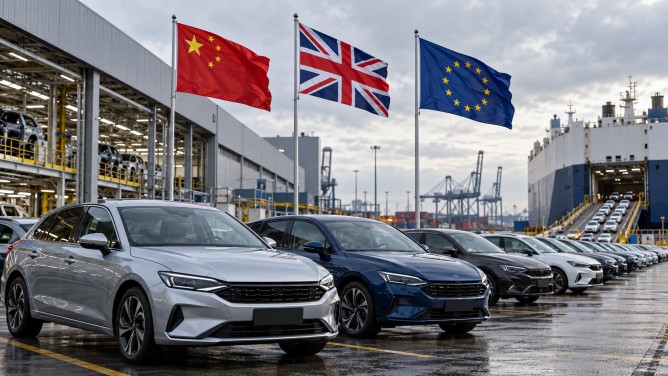
The British car industry is at a crossroads, facing a challenging decision about its trade policy regarding China and the European Union. As pressure mounts for the UK to impose tariffs on Chinese vehicle imports, the industry is weighing the potential economic impacts of such a move. Currently, the UK does not have specific tariffs on Chinese vehicles, unlike the European Union, which has implemented duties of up to 45% on Chinese electric vehicles.
Industry leaders caution that introducing similar tariffs in the UK could lead to higher prices for consumers and deter Chinese manufacturers from investing in the country. However, aligning more closely with China could jeopardize the UK’s access to the European market, which is crucial given that the EU is the largest destination for British car exports, accounting for approximately 58% of exports in the first half of the year.
Chinese car brands such as BYD, Omoda, and Jaecoo have seen rapid growth in the UK, driven by strong demand for affordable electric and hybrid vehicles. These brands have collectively captured about 12% of new car sales in the UK during the first eight months of 2026, highlighting their significant market presence.
Industry representatives are calling for the government to provide clearer guidance on its long-term trade strategy. While Chinese investment could bolster UK manufacturing and offer consumers more cost-effective vehicle options, potential EU restrictions could threaten the future of British car exports and suppliers.
The debate is intensifying as European policymakers consider additional measures to curb the influx of Chinese vehicle imports. Meanwhile, British manufacturers remain heavily reliant on maintaining access to the European market, underscoring the delicate balance the UK must strike in its trade relations.