
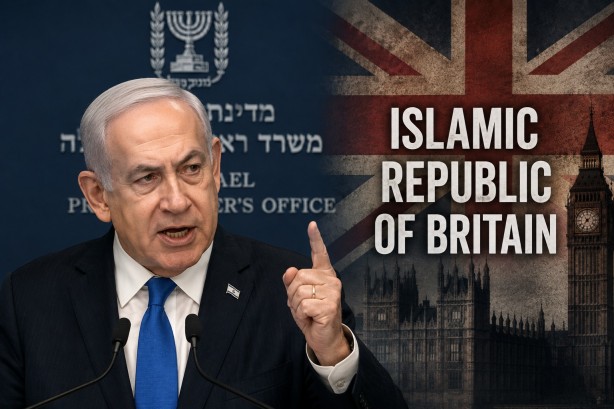
In a recent podcast interview with Israel’s army radio, Israeli Prime Minister Benjamin Netanyahu sparked controversy by characterizing the United Kingdom as the “Islamic republic of Britain” and claiming it to be the “first Islamic republic to get a nuclear weapon.” These comments have drawn sharp criticism from both British officials and political opponents within Israel. Netanyahu’s remarks came amid a discussion about Britain’s evolving political landscape, during which he also praised journalist Randolph Churchill, son of the renowned former British Prime Minister Winston Churchill, for his favorable coverage of Israel.
The comments have been criticized for perpetuating Islamophobic stereotypes concerning Britain’s Muslim community. Historically, Pakistan, known as the Islamic Republic of Pakistan, has been in possession of nuclear weapons since the 1990s. The strained relations between the UK and Israel have been further highlighted by these remarks, with tensions already escalating due to Israel’s military activities in Gaza and the UK government’s increasing disapproval of Israeli policies.
British Prime Minister Andy Burnham has previously indicated that the UK is prepared to heighten pressure on Israel, potentially implementing more stringent measures such as additional sanctions and trade restrictions, particularly concerning illegal settlements. Netanyahu’s contentious comments have intensified these diplomatic strains. In Israel, opposition figures like Avi Dabush have criticized Netanyahu, accusing him of endangering Israel’s relationship with a key international ally at a time when the nation is experiencing mounting diplomatic isolation.
The British Foreign, Commonwealth and Development Office condemned Netanyahu’s statements as “completely unacceptable” and confirmed that the issue has been formally addressed with the Israeli government. This diplomatic rift occurs against a backdrop of rising tensions between Israel and several Western allies, largely over the ongoing conflict in Gaza. Simultaneously, the discourse around Islamophobia and anti-Muslim rhetoric has been gaining momentum within the UK, further complicating the international landscape.