
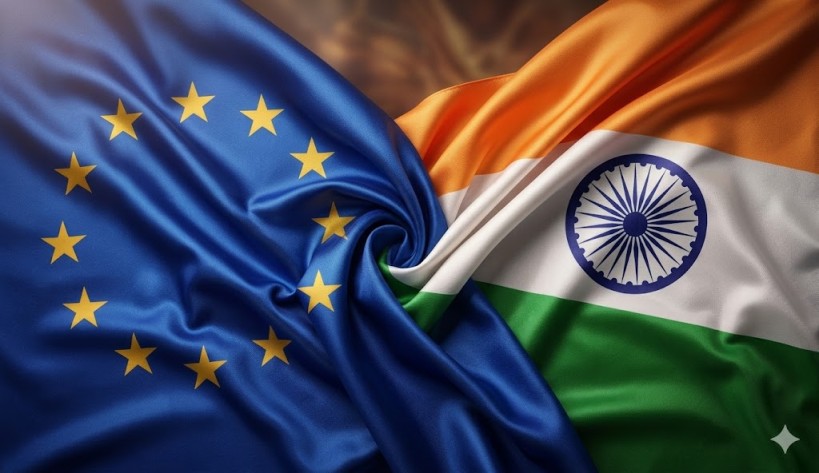
India and the European Union are poised to accelerate their efforts to finalize a much-anticipated Free Trade Agreement (FTA) by the end of the year, marking a significant advancement in what could become one of the globe’s largest trade partnerships. The development was announced following a trilateral meeting involving Indian Prime Minister Narendra Modi, European Council President António Costa, and European Commission President Ursula von der Leyen, held on the sidelines of the G7 Summit in Evian, France. This proposed agreement is set to be a comprehensive pact encompassing goods, services, digital trade, investment, and technology cooperation.
The envisioned pact would establish a massive free trade zone, connecting nearly two billion people and representing approximately one-fourth of global economic output. Both India and the EU have also indicated their intent to expand cooperation into other domains such as defense, connectivity, and strategic infrastructure projects, notably the India–Middle East–Europe Economic Corridor. With the conclusion of negotiations earlier this year, EU leaders have noted that the process has gained momentum, with both parties now concentrating on ironing out legal and technical specifics before the agreement is formally signed.
Prime Minister Modi underscored the significance of bolstered India-EU relations in fostering stability and inclusive economic growth, while European leaders highlighted the strategic importance of the partnership in tackling global economic and geopolitical hurdles. They have positioned this deal as a landmark framework for enhancing economic integration between India and Europe, particularly as global supply chains continue to evolve.
The trilateral meeting also encompassed discussions on broader cooperation in trade and investment, in addition to regional and global issues of mutual concern. Officials from both India and the EU have expressed that the momentum remains strong, with expectations for continued high-level engagement in the months leading up to the anticipated signing of the agreement. This accelerated effort underscores the shared commitment to solidifying a partnership that holds significant potential for both economic and strategic benefits.