
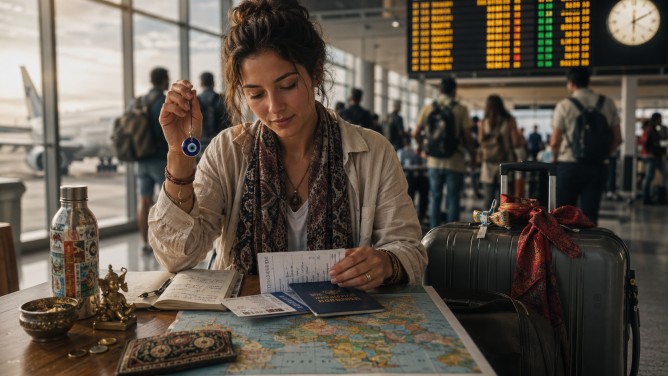
Traveling often brings with it an array of emotions, from excitement to trepidation, along with unique traditions and rituals that add a special touch to the journey. Across the globe, different cultures have embraced a variety of superstitions aimed at ensuring safe and fortunate travels. These beliefs, some of which have been passed down through generations, offer intriguing insights into the ways people seek to attract good luck and ward off misfortune on their adventures.
In the Balkans, garlic is more than just a cooking staple; it’s seen as a powerful talisman against negative energy and the evil eye. Travelers from this region might tuck a clove of garlic into their luggage, trusting in its protective qualities to keep bad luck at bay. Meanwhile, a common ritual for airline passengers is the act of touching or tapping the outside of a plane before boarding. This gesture is thought to bring luck and can help ease the anxiety of nervous flyers by providing a comforting routine.
Similarly, the practice of stepping onto an aircraft with the right foot first is more than a metaphorical expression in some cultures. It is believed to start the journey on a positive note, inviting good fortune to accompany the traveler. In parts of the Middle East and the Balkans, a symbolic gesture involves throwing water behind someone embarking on a journey. This act represents the hope for a smooth and safe trip, with the flowing water symbolizing a seamless return home.
Numerology also plays a significant role in travel superstitions, as different numbers carry distinct meanings across cultures. The number 13, for instance, is widely avoided in many Western countries due to its unlucky reputation. In contrast, Chinese travelers tend to steer clear of the number 4, as it sounds similar to the word for “death,” while Italians traditionally view 17 as an unlucky number. These beliefs often impact decisions related to hotel room assignments and floor numbers in buildings.
Finally, several customs revolve around the moments just before departure. One Slavic tradition involves sitting quietly on packed luggage for a brief period, allowing travelers a chance to mentally prepare for their journey. Conversely, in various cultures, sweeping the floor immediately after someone leaves is considered unlucky, as it might symbolically sweep away their good fortune or affect their safe return. While these customs lack scientific grounding, they remain a fascinating part of travel culture, often cherished for their ability to preserve family traditions and cultural identity, while adding to the thrill of embarking on a new adventure.