
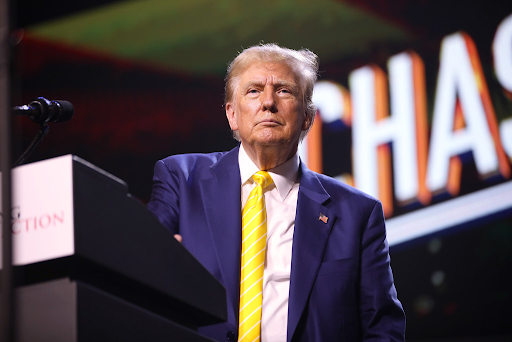
American consumers and businesses — already bearing the brunt of the country’s aggressive tariff policy — are set to face even higher costs after President Trump announced a 15% universal tariff on all imports Saturday, escalating his trade agenda just hours after the Supreme Court declared his previous approach unlawful.
Research consistently shows that approximately 90% of tariff costs are absorbed by domestic buyers rather than foreign exporters, and the $130 billion already collected under the now-invalidated IEEPA framework was paid overwhelmingly by American companies and households. The new 15% rate, drawn from Section 122 of the Trade Act of 1974, promises to extend and deepen that burden.
Trump, posting on Truth Social, framed the announcement as a necessary correction to decades of unfair trade practices by other nations. He described the rate as immediately effective and legally sound, even as analysts noted that the 1974 provision has never been used before and could face its own legal challenges. His administration plans to develop a permanent tariff structure during the 150-day window the law allows.
The Supreme Court had ruled 6-3 on Friday that the IEEPA-based tariff mechanism was unconstitutional without congressional authorization. Trump’s reaction was volcanic. He called the ruling “ridiculous” and “anti-American,” attacked majority justices as “fools and lapdogs,” and singled out his own nominees Barrett and Gorsuch as an “embarrassment to their families” barely worthy of attending the State of the Union.
Business groups across the US and the UK demanded stability and called the hike bad for trade and economic growth. European leaders echoed those calls, with Germany’s Merz warning of economic poison and France’s Macron defending the principle of judicial independence. The UK, previously locked into a 10% rate, now faces fresh uncertainty alongside every other trading partner.