
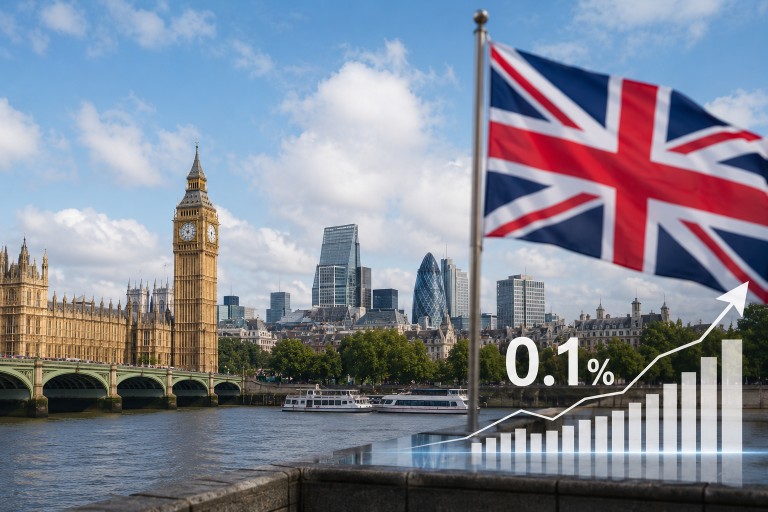
The United Kingdom’s economy saw a modest expansion of 0.1% in May, bouncing back from a similar decline of 0.1% observed in April. This slight growth was primarily fueled by a 0.3% rise in the services sector. However, this gain was somewhat counterbalanced by declines in other areas, with production experiencing a 0.5% drop and construction activity falling by 0.8%. Notably, the scientific research and development sector emerged as a standout performer, achieving a 5.1% increase in a single month.
Looking at the broader picture over the three months leading up to May, the UK’s economic growth stood at 0.7%. This marks a slight deceleration compared to the previous three-month period, which recorded a growth rate of 0.8%. Despite challenges, the economy demonstrated a degree of resilience, navigating through higher energy prices and the global uncertainties stemming from ongoing conflicts in the Middle East.
Economists have voiced concerns about the continued risks to economic growth, citing rising energy costs and persistent supply chain disruptions as significant hurdles. These factors are seen as potential threats to maintaining the current growth momentum, despite the recent uptick.
In light of these dynamics, the International Monetary Fund has revised its forecast for the UK’s economic growth, predicting a 1% increase for the current year. Nonetheless, analysts remain cautious, suggesting that the economic outlook is still clouded by geopolitical tensions that could impact future growth prospects.